Almost every business conversation now includes a question about AI. Usually it comes as "should we be using AI?", which is hard to answer. The more useful question is: which tasks in our business are repetitive, high-volume and based on reading something? That is where AI earns its place today.
This is an honest guide to where AI helps a small or growing business, where it does not yet, and how to try it without betting the business on it.
Where AI genuinely helps
Today's AI models are good at reading, sorting and summarising text, even when it does not arrive in a fixed format. That makes them useful for a specific kind of work:
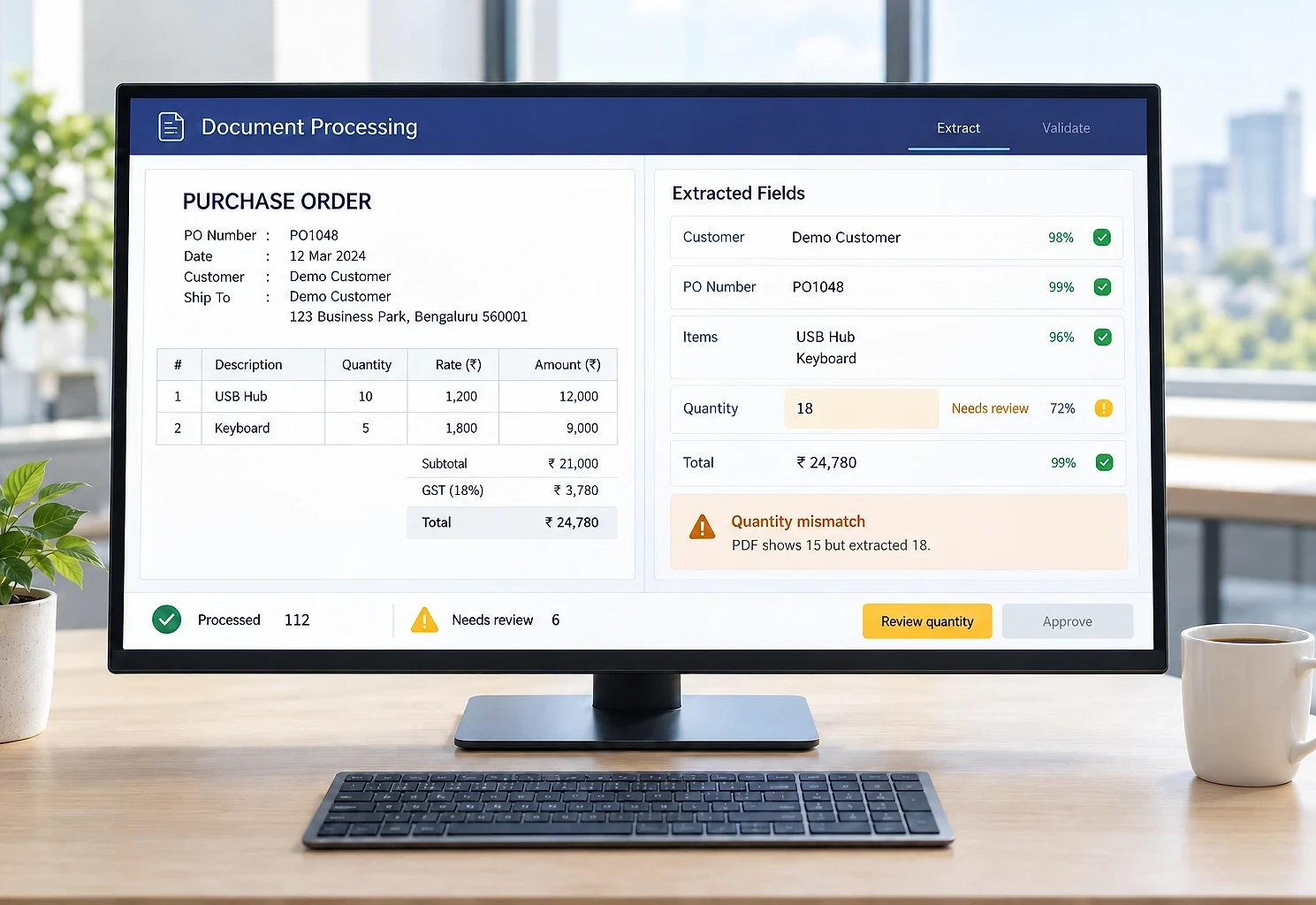
- Reading documents and emails. Purchase orders, invoices, delivery notes and enquiries can be read and the key details extracted automatically, then checked and entered into your system.
- Answering questions from your own documents. An assistant that answers staff or customer questions from your policies, product sheets and manuals, and shows where each answer came from.
- Sorting and routing. Deciding which team an email or ticket belongs to, how urgent it is, and what kind of request it is.
- Drafting. First drafts of routine replies, summaries of long threads and short reports, which a person reviews before sending.
What these have in common: the volume is high, the task is repetitive, and a person can quickly check the result.
Where it does not help yet
AI is a poor fit when:
- Every answer must be exactly right with no review, such as final payment amounts or legal commitments
- The volume is low. If a task happens five times a week, automating it rarely pays back
- The process itself is unclear. If people do it differently every time, AI will copy the confusion, not fix it
- The data does not exist. AI cannot report on information your business never records
In those cases, the better first step is usually ordinary software: a clear process, a proper system of record, and simple automation without AI.
The rule that makes it safe
The single most important design choice is this: let AI handle the confident cases, and send everything uncertain to a person.
Good AI systems rate each result, using validation rules and cross-checks against your own records rather than trusting the model's word. Clear documents go straight through; unclear ones are flagged for review, with the original shown beside what was extracted. Every decision is logged. That way the routine work disappears, mistakes are caught before they matter, and you can always see what happened and why.
Is our data safe?
It can be, if the system is set up properly. Business data should be processed through providers and settings that do not use it to train public models, stored in accounts that belong to you, and limited to the people who need it. Ask any provider to explain exactly where your data goes. If they cannot, do not proceed.
AI providers often process data outside India. That is allowed under India's Digital Personal Data Protection Act, 2023, but if the data includes personal details of customers or staff, you remain responsible for it: tell people how it is used, keep only what you need, and choose providers that contractually do not train on it.
How to try it without a big bet
- Pick one task that is high-volume, repetitive and easy to check, such as reading incoming orders.
- Measure it today: how many a week, how long each takes, how many errors.
- Run a small pilot on real documents for a few weeks, with a person checking everything.
- Compare the numbers, then decide whether to extend it.
That is a project measured in weeks, not months, and it tells you more about AI's value for your business than any amount of reading.
If you have a task in mind, describe it to us. We will tell you honestly whether AI is the right tool for it, or whether something simpler would do the job better.