Digital systems for logistics and transport operations
Logistics runs on coordination between people who are rarely in the same place. Software that keeps consignment status, documents and exceptions current removes most of the phone calls that fill the day.
- Common systems
- Customer Portal, Management Reporting Dashboard
- Typical first step
- Consignment tracking with customer visibility
- First phase live in
- 3 to 5 weeks
Plenty of data, little of it usable
Transport and logistics businesses generate an enormous amount of operational data and capture surprisingly little of it in a usable form. Consignment status lives in WhatsApp groups, proof of delivery arrives as a photograph, and the monthly performance picture is assembled from several spreadsheets. The opportunity here is rarely a single large system. It is usually a series of focused improvements: capture status once and let everyone see it, get documents off phones and into a structured store, and put the operational numbers in front of management while they can still act on them.
Why logistics teams spend the day on the phone
Status lives in conversations
Consignment updates travel through calls and WhatsApp groups. Customers ask where their goods are and someone has to ask someone else, who asks the driver.
Documents are hard to retrieve
Lorry receipts, e-way bills, proof of delivery and weighment slips exist as photographs on individual phones, which makes billing disputes slow and expensive to resolve.
Vehicle and transporter coordination is manual
Matching available vehicles to loads, tracking transporter documents and confirming rates is done through repeated phone calls and a shared sheet.
Billing reconciliation is painful
Freight bills are checked against agreed rates, detention and additional charges by hand, and disputes surface weeks later without supporting documents.
Management data arrives too late
Delivery performance, vehicle utilisation and route profitability are known at month end rather than in the week when a problem could be fixed.
What we build for transport businesses
Consignment tracking with customer visibility
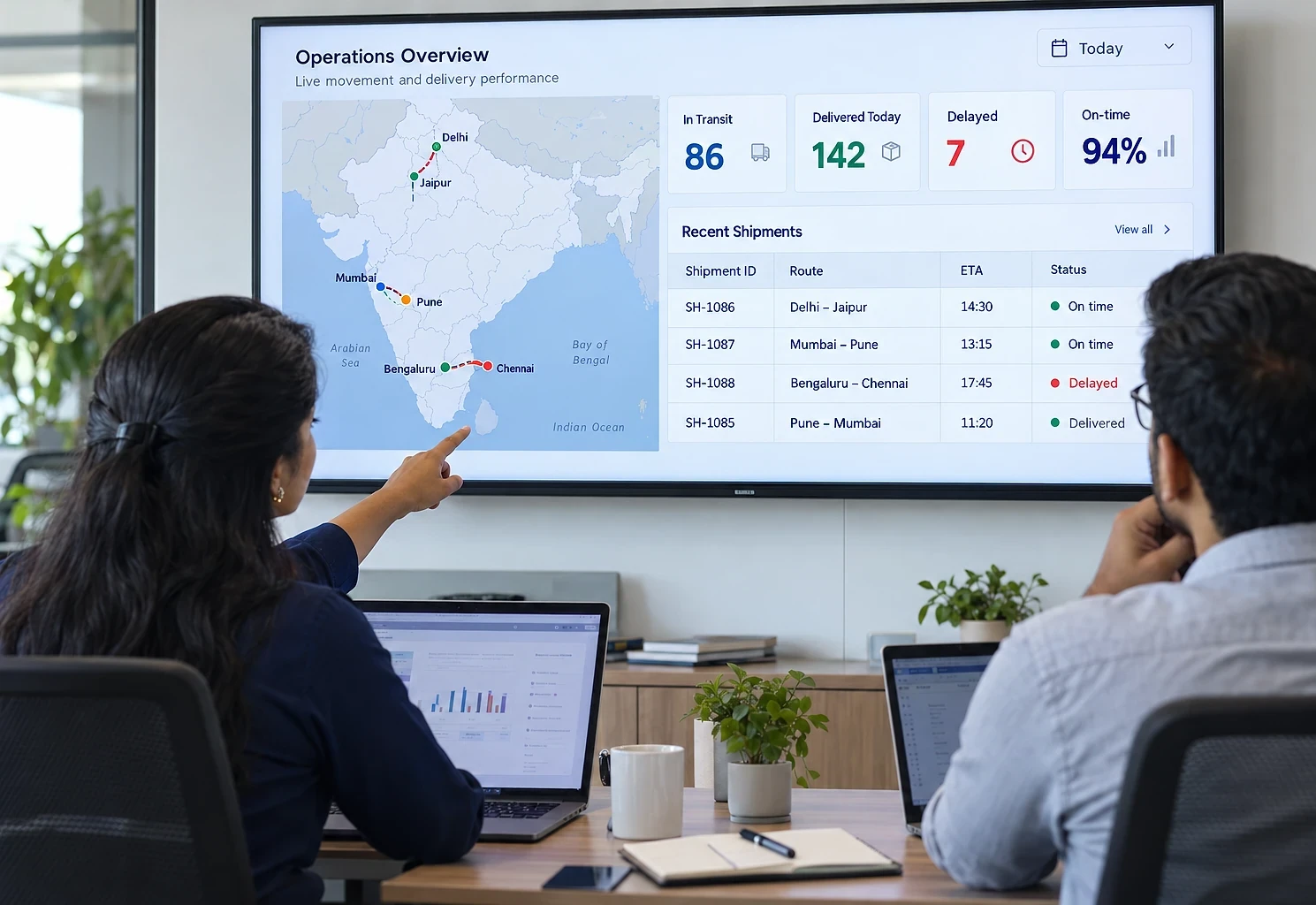
Status captured once at each checkpoint and immediately visible to the customer through a portal or a tracking link, which removes a large share of incoming status calls.
Digital proof of delivery
Delivery confirmation captured on a phone with photograph, signature, timestamp and location, filed against the consignment and available instantly for billing.
Transporter and fleet owner portal
Vehicle and driver document tracking with expiry reminders, trip assignment, acknowledgement and payment status, replacing repeated phone coordination.
Operations dashboard
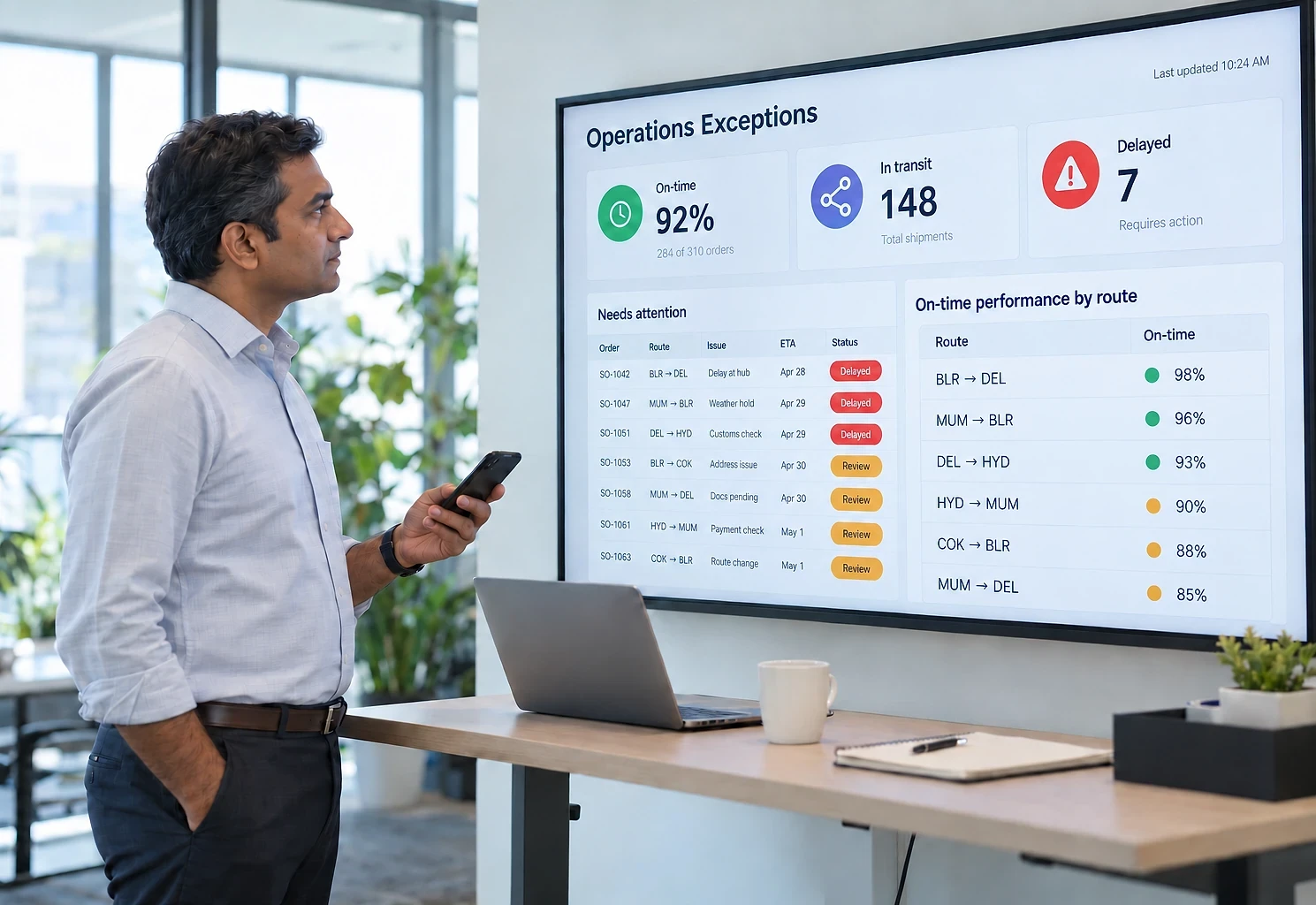
Live view of consignments in transit, delayed shipments, vehicle utilisation and delivery performance by route, lane or customer.
Freight billing automation
Bills generated from trip data against contracted rates, with detention and additional charges calculated from recorded timestamps rather than negotiated afterwards.
Document extraction from email
Booking instructions, purchase orders and delivery notes that arrive by email read automatically and turned into consignment records.
Not sure which one to start with?
Tell us how your business runs today. We will suggest the first step and give you a fixed price for it.
Solutions and services for this sector
Ready-made systems that address the problems above, and the services used to build them.
Customer Portal
A login area where customers check their own orders, invoices, documents and requests.
Management Reporting Dashboard
One current view of the business, refreshed automatically, with numbers every department agrees on.
Vendor Portal
Structured vendor onboarding, document tracking, purchase order acknowledgement and invoice submission.
Email & Document Automation
Read incoming emails and documents automatically, extract what matters and file it where it belongs.

Too many status calls in a day?
Describe how consignment status, documents and billing move today. We will tell you which focused improvement is worth making first.
The first conversation is free, with no obligation.