"We need an app" is a common starting request, and one of the most useful to question. Sometimes an app is exactly right. Often a well-built website or web app does the same job for less money, ships faster and is easier to keep up to date.
The decision is not about which technology is more modern. It is about how often people will use it, where they will be when they do, and what the phone needs to do for them.
What a mobile app is genuinely good at
A native-feeling app installed on the phone earns its cost when:
- People open it several times a week, so having an icon on the home screen matters
- You need push notifications that reliably reach the user: order updates, reminders, approvals
- The work needs the camera, barcode scanner, GPS or a signature on the phone
- Users work in places with poor or no connectivity, such as field sites, warehouses or rural routes, and need to keep working offline
- You want customers to stay logged in and reorder in a couple of taps
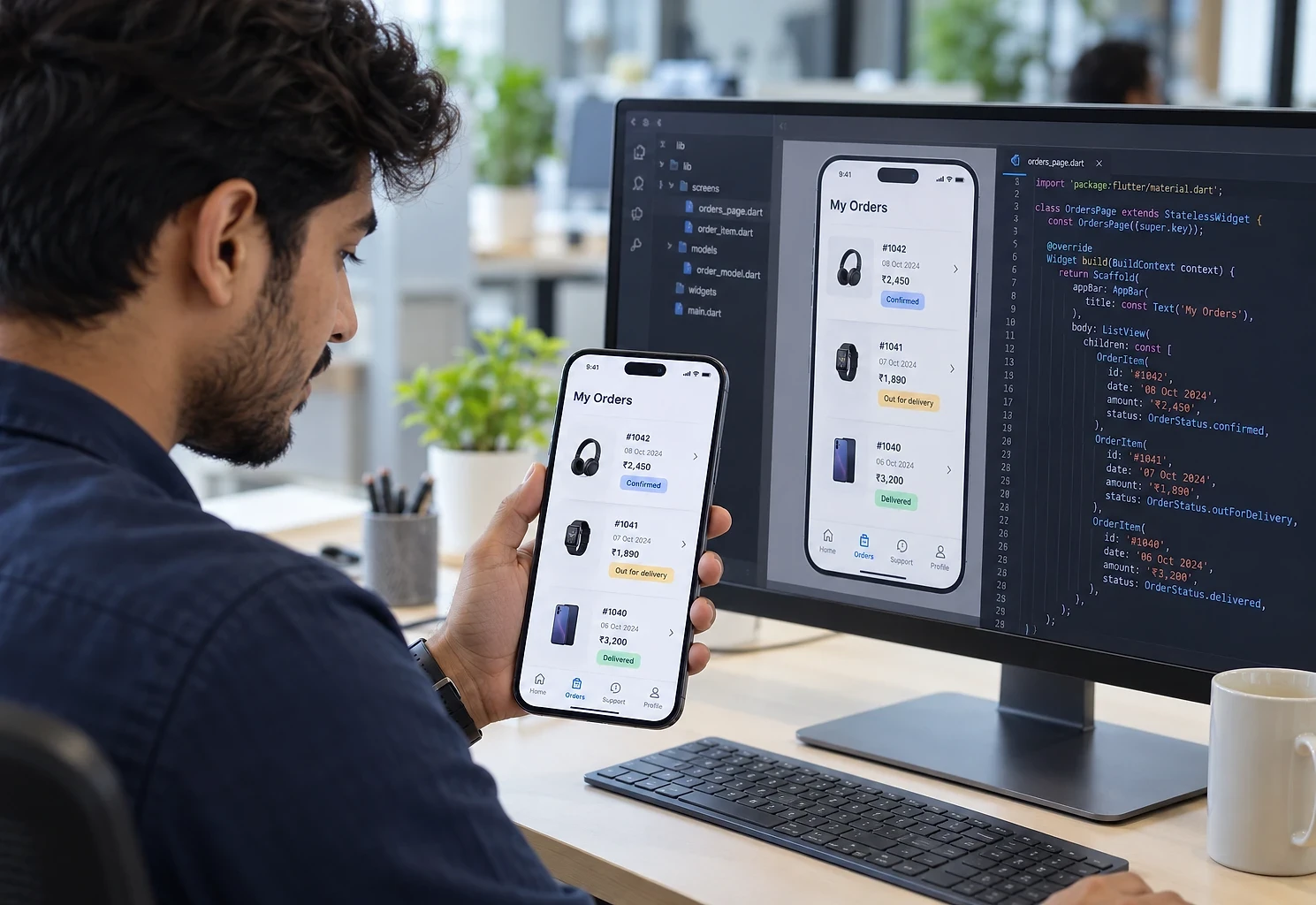
Field teams are the clearest case. A technician who closes ten jobs a day, takes photos and captures a customer signature on site is far better served by an app than by a website on a phone browser.
What a website or web app does just as well
A responsive web app runs in the phone's browser and adapts to the screen. It is the better choice when:
- Most visitors come once or occasionally, for example to make an enquiry or check a status
- The main job is showing information and collecting a form
- You need it on phones, tablets and laptops alike, from one codebase
- You want changes to go live instantly, without waiting for app store review
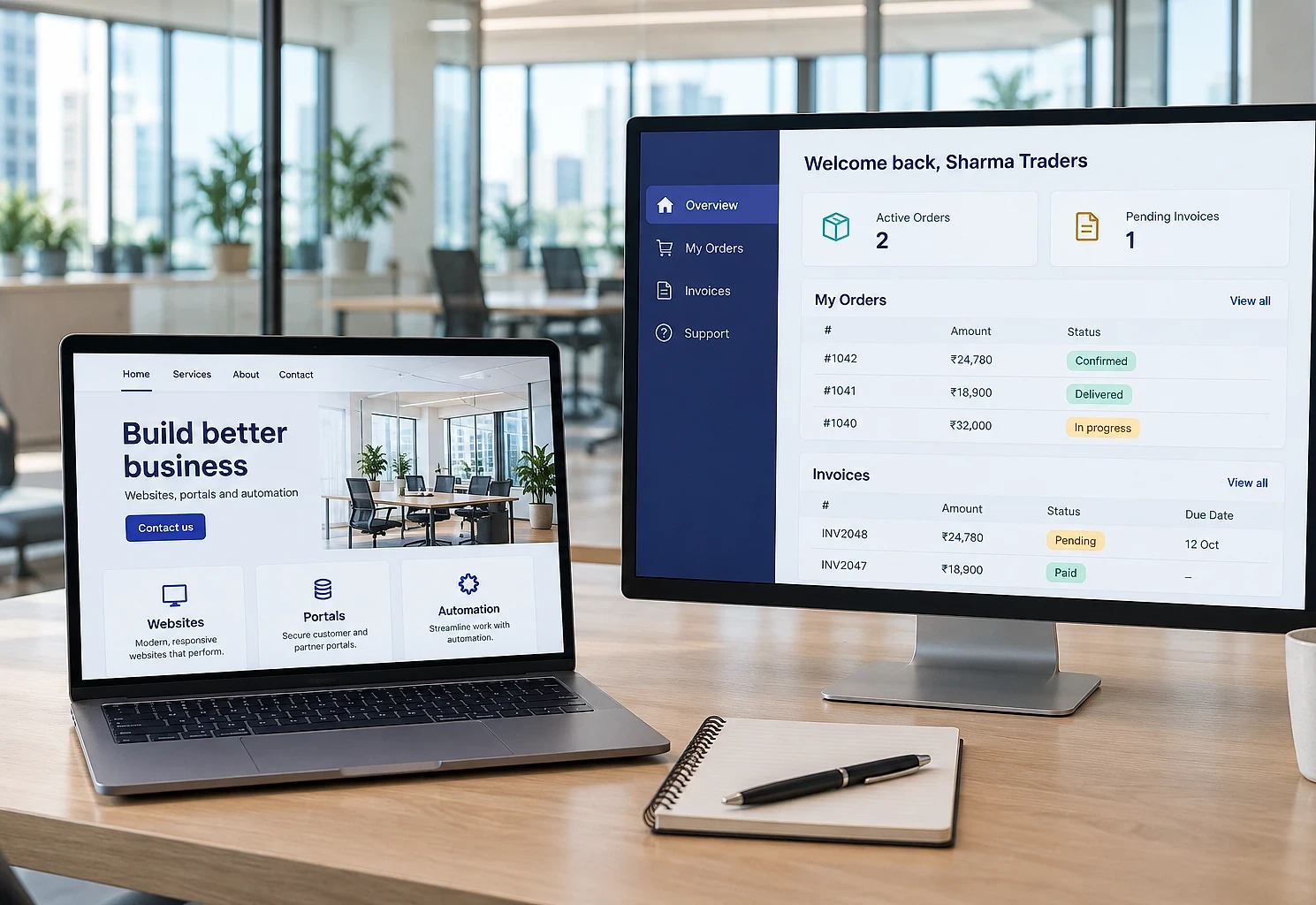
Many "apps" businesses ask for are really customer portals: log in, see your orders, download an invoice, raise a request. That is a web app. It works on every phone the day you launch, and nobody has to install anything.
The middle option: an installable web app
There is a third choice that often gets missed. A progressive web app (PWA) is a web app that can be added to the phone's home screen, opens full screen like an app, keeps working offline for the screens it has already loaded, and can send push notifications on Android and, since iOS 16.4, on iPhones once it has been added to the home screen.
It is built once, goes live without app store review, and updates instantly. What it cannot do as well as a native app is deep device work: continuous GPS in the background, Bluetooth hardware, or heavy offline data entry over many days. For a customer portal that people use a few times a month, or an internal tool for office staff, a PWA is frequently the sensible answer.
A simple test
Ask: will your typical user open this at least once a week, and does it need something only the phone can do?
If both answers are yes, build an app. If neither is, build a website or web app. If only one is, start with a web app, installable as a PWA if a home-screen icon helps, and add a native app later on the same backend so nothing is built twice.
Android, iOS or both?
Usually both, from one cross-platform codebase, so every change ships to both at the same time and cost. If your users are almost all on Android, which is common for field teams in India, you can launch on Android first and add iOS later from the same code.
What it costs to run
An app has running costs a website does not: developer accounts on the Google Play and Apple stores, store review for every release, and updates when new phone operating systems arrive each year. None of this is large, but it is real, and it continues for as long as the app is live. A web app avoids most of it.
The sequence we usually recommend
- Build the backend and a web version first. It proves the workflow with real users quickly.
- Watch how people use it. Usage tells you whether an app is worth it far better than a planning meeting.
- Add the mobile app on the same backend once the case is clear, so the app, the web version and your admin screens always show the same data.
If you are weighing this up, describe who will use it and how often. We will tell you plainly whether an app is worth building yet.